Jira is where agency PMs go to feel bad about tooling. It's powerful, your developers tolerate it, some clients even demand it — and it was designed for a product team shipping one product forever, not an agency running twelve clients in parallel.
Configuration: aggressively boring
The agencies that survive Jira all made the same choice: one simple workflow, everywhere. To Do → In Progress → Review → Done. Custom per-client workflows feel attentive; six months later nobody can read a cross-project report and every automation breaks per-client. Resist. Same for issue types (task, bug — you rarely need more) and required fields: due date and assignee, always. An unassigned, undated task is a future overdue surprise.
The client question
Don't give clients Jira seats. They won't log in (you know this), and when they do, raw engineering tickets read as chaos to someone who bought "a website". The client belongs in their chat, receiving updates in their language — "the payment page is in review", not "GAV-782 moved to QA".
What Jira still can't do
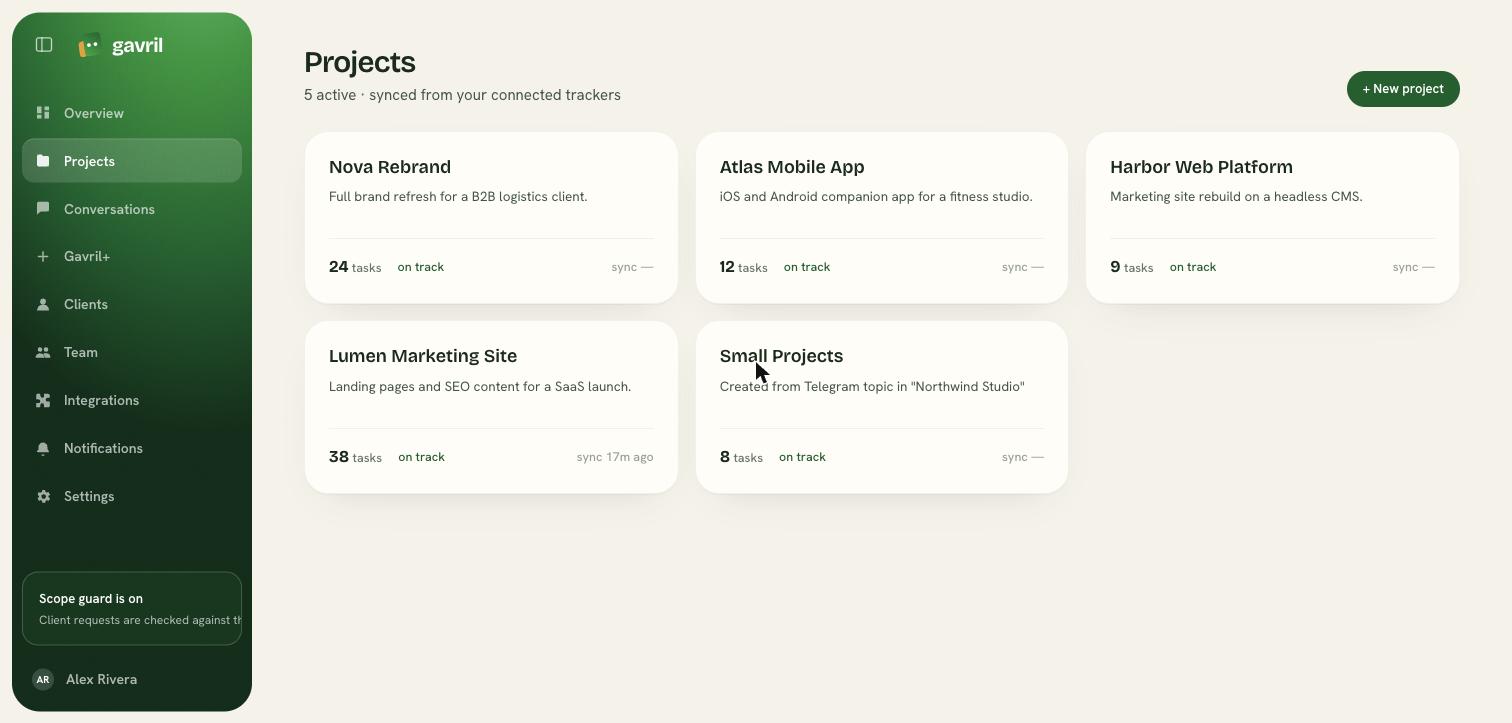
Jira tracks work you've agreed to. It has no opinion on whether work should enter — type it in, and it's real. For agencies that's the dangerous gap: the board happily absorbs out-of-scope requests as if they were free. The missing layer sits between the client's chat and the board: it answers status from Jira data, and checks each new ask against the SOW before it becomes a ticket. That's what Gavril adds — Jira stays the system of record, and stops being the system of accidental commitments.
← All posts